
 Member login
EU Simplification: two updates
Battery Regulation due diligence delayed
The Council of the EU has endorsed a two-year delay to the due diligence obligations under the EU Battery Regulation.
These rules, originally set to apply from 18 August 2025, would then take effect on 18 August 2027, granting producers and exporters more time to adapt.
The European Parliament’s Environment Committee also recently approved the Commission’s proposal to delay the application of the new rules for batteries, to be followed by a final full plenary vote on 10 July.
If Parliament also approves the proposal, trilogue talks could follow shortly afterwards.
The delay, which is part of the Commission’s broader Omnibus IV package, aims to address industry concerns over the lack of accredited verification bodies and to streamline implementation.
Under the revised timeline, companies would only need to report on their due diligence compliance every three years rather than annually.
The Commission also plans to publish detailed implementation guidelines a year before the new rules take effect.
EU Waste Catalogue
In parallel, the updated EU Waste Catalogue with new waste codes for battery-related materials entered into force on 9 June 2025. The act introduces binding classification rules as of 9 November 2026.
These changes aim to improve traceability of hazardous fractions, such as lithium-based batteries and black mass, and will affect cross-border waste shipments, especially to non-OECD countries.
Higher thresholds for CSRD and CSDD proposed
Meanwhile, broader simplification efforts are still in flux.
MEP Jörgen Warborn, European Parliament rapporteur for the amendments to the Corporate Sustainable Reporting Directive (CSRD) and the Corporate Sustainability Due Diligence Directive (CSDDD) has published his draft report on the text.
Warborn proposes to restrict reporting and due diligence rules to companies with more than 3,000 employees and €450 million in revenue, which would remove a substantial share of companies from scope.
This proposal is in line with the one made by Rapporteur Janusz Lewandowski, as reported in COMPASS last month here.
EU countries have also agreed the Council’s negotiating mandate on the file.
In the case of reporting, this includes an employee threshold of 1,000 (in line with the Commission’s original proposal), but a net turnover threshold of over €450 million (whereas the Commission proposal was a net turnover threshold of €50 million).
Regarding due diligence obligations, EU countries go even further, increasing thresholds to 5,000 employees and net turnover to €1.5 billion.
News & Events
Latest news and events
It is not only about recycling processes and compliance, it is also about networking. ERP shares knowledge, insights, and news so that together we can promote the sustainable agenda.

News, Packaging
October 15th, 2026
This webinar provides an introduction to the EU Packaging and Packaging Waste Regulation (PPWR), explaining what businesses need to know,

News, Textiles
October 12th, 2026
From 21-23 October 2026, sustainability leaders, innovators, investors and policymakers will gather in Guimarães, Portugal, for the fifth edition of
News, Textiles
October 12th, 2026
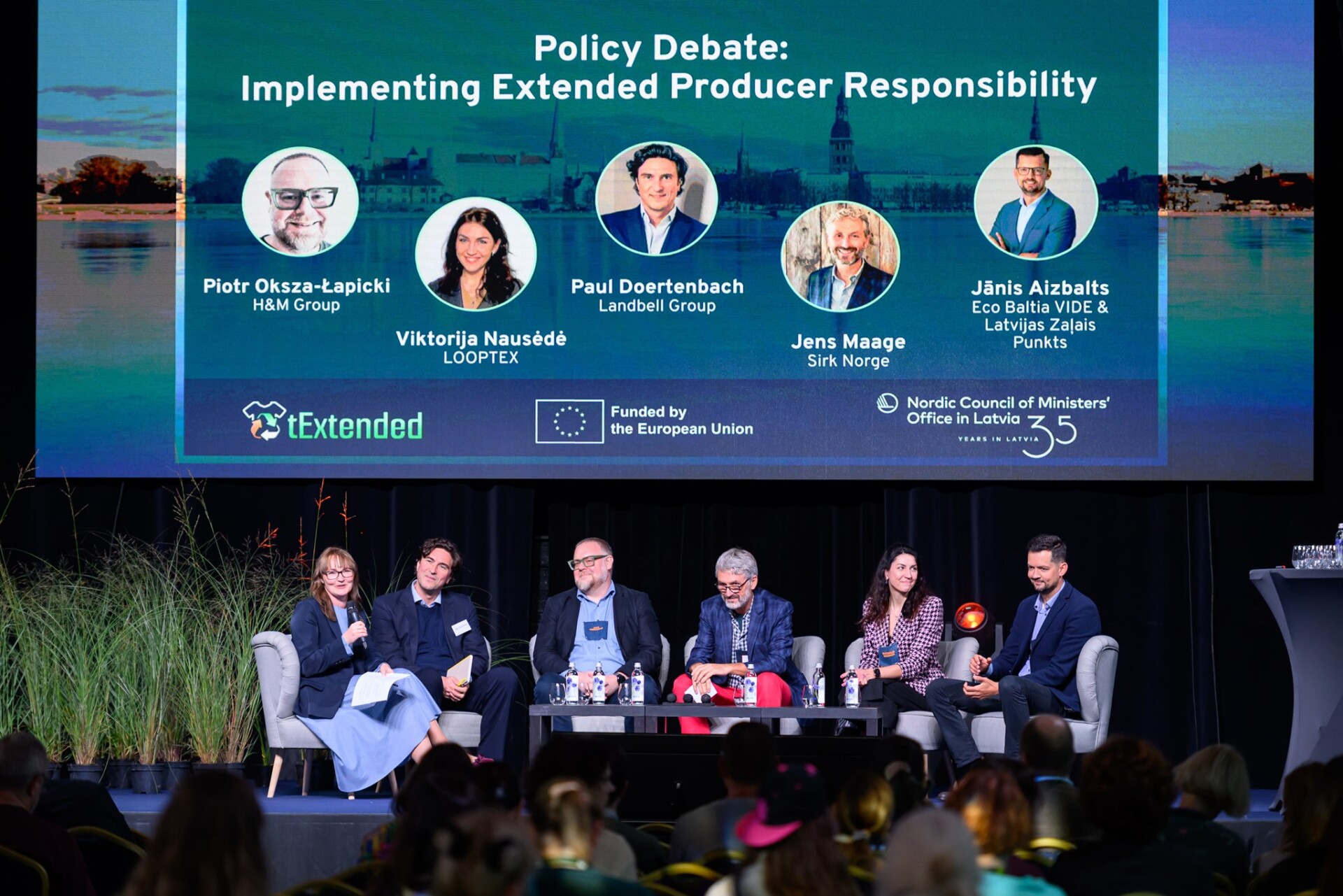
Last week, our colleagues Paul Doertenbach and Kerli Kant Hvass participated in the Nordic-Baltic Textile Circularity Forum 2026 in Riga,


