
 Member login
Types of Recycling Containers in Spain
Properly separating the waste we generate is one of the most effective actions to reduce environmental impact and promote the circular economy. In the late 90s, some cities in Spain started using the first yellow and blue containers to begin waste separation. Today, various recycling containers are designed to facilitate waste separation and proper management. Knowing what to deposit in each one is necessary to streamline the recycling process and ensure these materials have a second life instead of ending up in landfills.
In Spain, the recycling system is based on color-coded containers, each designated for a specific type of waste. It is important to know what to deposit in each to optimize the recycling process.



What Are Recycling Containers and What Are They For?
Recycling containers are bins designed for selective waste collection, allowing classification and subsequent treatment. They are placed in public areas, and their use helps recover valuable materials, reduce landfill waste, and minimize pollution. Active citizen participation is key for an efficient recycling process, as proper waste separation at the source facilitates further treatment and maximizes resource recovery.
How to Use Recycling Containers Correctly?
Proper waste separation is not only a responsibility but also an opportunity to improve material recyclability. Avoiding common mistakes ensures that recycling efforts are effective and that materials can be reused.
Common questions may arise, such as: Should plastic food containers go in the yellow bin? Do used napkins go in the blue or brown bin? Do broken glasses go in the green bin?
· Do not deposit incorrect waste: Not all plastic items go in the yellow container. For example, plastic food containers and toys should be taken to recycling centers.
· Do not recycle dirty paper: Used napkins and greasy paper should go in the brown or general waste container.
· Do not mix different types of glass: Wine glasses and broken drinking glasses are made of crystal, not glass, so they should not be placed in the green container.
Properly depositing waste in the right container is crucial to streamline the recycling process. If you still have doubts, consult reliable sources such as AIRE by Ecoembes or check with your local council.
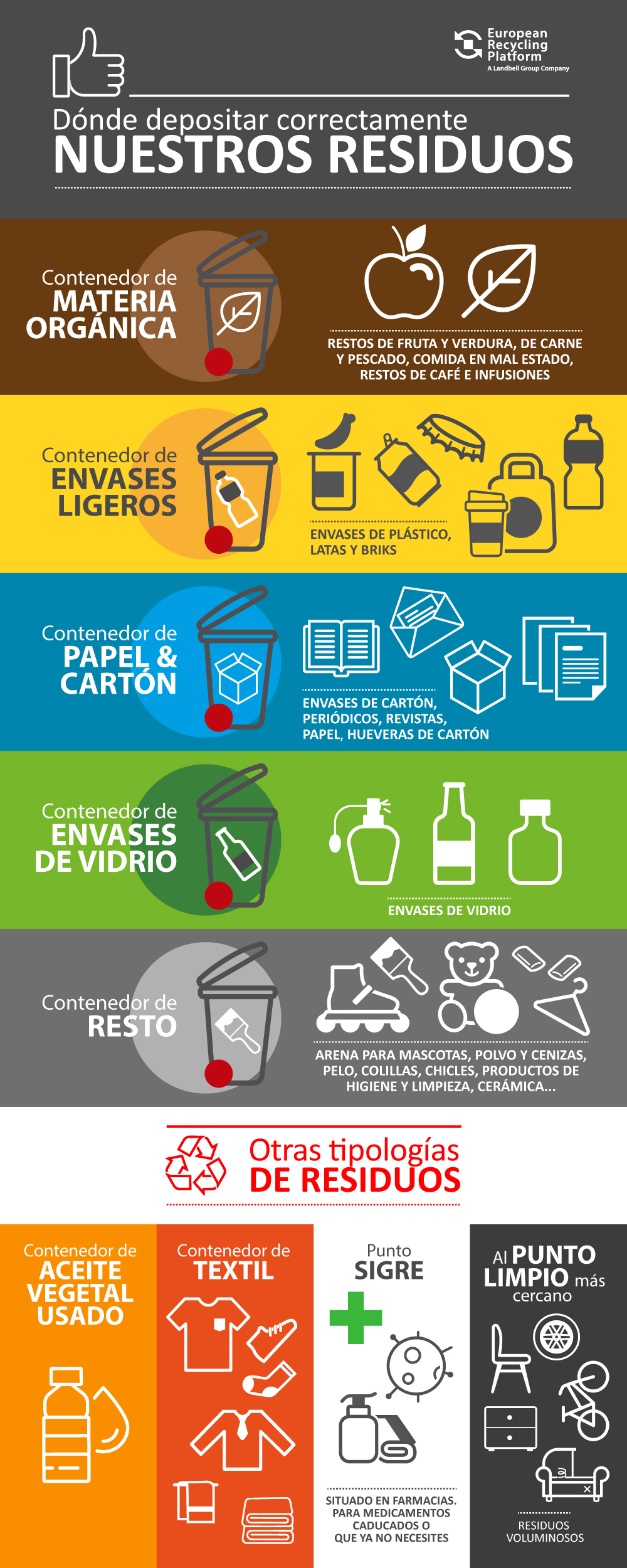
General Recycling Rules for Each Container
Each type of container has specific rules. Checking beforehand ensures a more effective waste separation.
What to Do If There Are No Recycling Containers Nearby?
If your area lacks a specific recycling bin, you can:
Visit recycling centers (puntos limpios) for proper waste disposal.
Contact your local council to ask about alternatives or request a container.
Main Benefits of Using Recycling Containers




Find Recycling Containers in Your City
To properly dispose of waste, you need to know where recycling containers are located. You can:
- Check your local council’s website – Most municipal websites provide maps or information on recycling points.
- Contact your regional waste management authority – Waste consortia usually offer guides and maps for recycling points.
- Use recycling apps and platforms – Several apps help locate recycling containers, such as Reciclos by Ecoembes.
FAQs About Recycling Containers
What Should I Do If a Recycling Bin Is Full?
If a container is full, avoid leaving waste outside. Look for another nearby bin and notify waste collection services.
Can Different Waste Types Be Mixed?
No, each type of waste must be placed in the correct container to ensure effective recycling. Mixing waste complicates the treatment process and often results in disposal rather than recycling.
How to Recycle Complex Products?
Some items, such as appliances, light bulbs, or containers with hazardous substances, must be taken to recycling centers or specialized collection points. The best option is to check with the local council or recycling companies for proper disposal.


