
 Member login
What infrastructure is needed for UK Textiles EPR?
UK Textiles EPR: Demand for recycled clothing has surged 76% year-on-year[1], according to research by AM Custom Clothing, signalling a fundamental shift in how the fashion industry thinks about materials and circularity
Introduction
UK Textiles EPR: Demand for recycled clothing has surged 76% year-on-year, according to research by AM Custom Clothing, signalling a fundamental shift in how the fashion industry thinks about materials and circularity. Yet while brands are responding to market momentum, the UK lacks the critical infrastructure needed to turn textile waste into the recycled materials that these companies, and their customers, increasingly want to buy.
As someone who has spent years working in environmental compliance and Extended Producer Responsibility (EPR), I'm watching the textiles sector with interest. Needless to say, ERP UK is poised and ready to play our part[2]. The EU has finalised its EPR rules under the revised Waste Framework Directive, with fully operational schemes required by April 2028. Meanwhile, the UK remains in the early stages, with no legislation yet underway.
My view is that our focus should be on planning and funding the infrastructure needed to make circular clothing business models possible. This big question is whether we'll build the infrastructure needed to make it work effectively when textiles EPR comes into play.
The UK Textiles EPR infrastructure gap we need to address
Currently, approximately 1.4 million tonnes of post-consumer textiles are generated annually in the UK. Nearly half ends up in general waste, destined for incineration or landfill. It’s an environmental problem. It's also a massive waste of valuable materials that could be feeding the growing demand for recycled content.
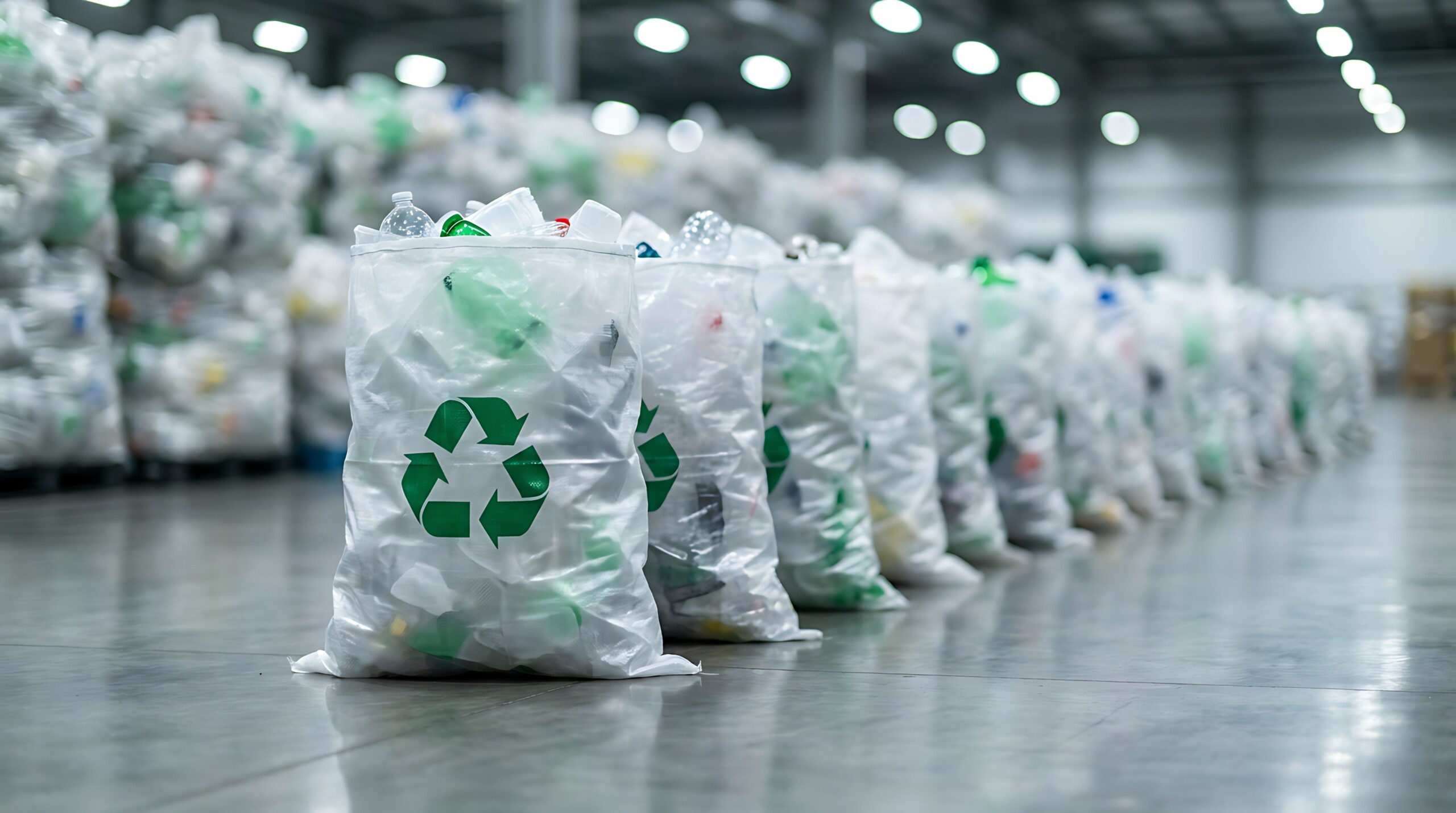
The infrastructure challenge is multifaceted. We need robust collection systems that can handle the volume and diversity of textile waste. We need sorting facilities capable of separating materials by fibre type and quality. We need recycling plants with the technology to process everything from pure cotton to complex poly-blends through both fibre-to-fibre and chemical recycling processes. And we need the logistics networks to move materials efficiently through this system.
Without this infrastructure, any EPR scheme risks becoming a compliance exercise rather than a genuine driver of circularity. Producers will pay their fees, but the materials won't have anywhere meaningful to go.
Who should build and fund this infrastructure?
Unlike some other waste streams subject to EPR, the fashion industry already benefits from a “rag trade” that has existed for centuries. This means there is already a long-established network of collectors, sorters and recyclers. And that heritage should not be overlooked. Those already operating in the textiles recycling space hold the deep expertise and experience that will likely form the backbone of any future system.
Industry specialists such as members of the Textile Recycling Association, have decades of knowledge about handling, sorting and processing textile waste. They understand the contamination risks that come with man-made fibres, mixed materials and varied composition. Any infrastructure development should build on this foundation rather than trying to reinvent it.
However, the current infrastructure was not designed to operate at the scale or complexity that EPR will require. Therefore, what the sector needs now is not simply funding, but clarity.
Despite calls from various stakeholders, government funding for recyclers seems unlikely to materialise in meaningful amounts. Instead, what the sector needs is something more valuable: clear timelines, confirmed milestone dates and policy certainty.
When recyclers, collectors and producers have clarity on the policy landscape and timeframes they will be operating within, they can make investment decisions with confidence. Banks and investors will back infrastructure projects when there's regulatory certainty about future demand. A promise of clear policy and timelines unlocks private
What consumers think about paying for circular clothing models
2025 research on UK consumer views provides evidence that people are willing to support UK Textiles EPR charges when they're clearly explained. The study found that a 50p charge per clothing item would largely go unnoticed by shoppers, while £1 charges on items above £40 were found to be acceptable.
Critically, the research found over 80% of consumers favoured clearly displayed charges at point of sale rather than hidden costs. This shows that transparency matters. When people understand what they're paying for and why, they are more likely to support it. In fact, the same research found that 70% of consumers back visible charges when properly communicated.
Consumers also supported simple, traffic-light style labelling systems that indicate the environmental impact of products. This could align with eco-modulation principles, where more sustainable, durable products (for example) pay lower EPR fees while complex, less durable items with mixed fibres face premium charges.
These are interesting findings and, if implemented in a UK textiles EPR system would be a significant departure from the approaches used so far for electricals, batteries, packaging and vehicles – in all of which the EPR fee is hidden from consumers.
The technology and innovation challenge
Investment in new technologies and processes is crucial for Textiles EPR to succeed. Chemical recycling, automated sorting facilities and advanced separation techniques all require significant capital investment. These technologies exist but need scaling up to handle the volumes we're talking about.
Contamination remains a key challenge. Unlike packaging or electronics, textiles come in an enormous variety of compositions. A single garment might contain multiple fibre types, buttons, zips, labels and fabric treatments. Sorting this manually is labour-intensive and expensive. Automated systems using technologies like near-infrared spectroscopy can identify fibre types at speed, but these facilities need building.
The government's role here is to define the policy boundaries clearly. What counts as a textile product under EPR? Are we talking about garments only, or ‘household like’ textiles from businesses too? How will eco-modulation work in practice? What measurement systems will we use to assess durability and recyclability?
These definitions matter because they determine what infrastructure gets built and where investment flows. Existing approaches to textiles are inadequate for the future volume and compositional challenges. We need new measurement systems and investment in separation and recycling plants designed specifically for the complexity of textile waste streams.
Learning from the EU experience
Circular clothing models are going to be implemented across the EU, even if the timelines for Textiles EPR rollout across individual member states are uncertain.
What’s certain is that the EU's head start gives the UK a valuable opportunity to learn from their implementation. France and the Netherlands already have operational national EPR programmes. Italy launched its scheme in 2025. By the time UK legislation arrives, we'll have real-world data on what works, and what doesn't.
I’m not saying we should copy the EU model wholesale. The UK has its own textile sector characteristics, waste management landscape and policy priorities. But we can avoid their mistakes and adopt their successes. We have the opportunity to learn which eco-modulation approaches drive genuine design changes, and which just add administrative burden. We can identify and understand how different fee structures affect producer behaviour and infrastructure investment.
Design for circularity must be part of the solution
Infrastructure alone won't solve the textiles waste challenge. We need producers to be designing products with end-of-life in mind from the start. Based on current infrastructure capabilities, this could mean using mono-materials where possible, designing for disassembly, and reducing material mixing.
Eco-modulation could be set up to reward these design choices with lower EPR fees. This would result in a producer choosing pure cotton over a poly-cotton blend, or designing a garment that can be easily disassembled for recycling paying less. This would create a direct financial incentive for circular design while simultaneously making the infrastructure's job easier.
The market is already moving in this direction. Linen volumes have risen 73% between 2020 and 2025, viscose increased 54% and lyocell grew 42%, according to the AM Custom Clothing research mentioned earlier. Brands are selecting fabrics based on garment performance, longevity and environmental credentials together, not just sustainability in isolation.
Recycled polyester is finding its place in garments requiring stretch, water resistance or quick-drying performance. Linen and viscose work well for breathable warm-weather clothing. The point is that sustainable fashion isn't about one material replacing another. It's about using the right fabric for the right application while ensuring it can be recovered and recycled at end of life.
The cost of inaction
Without proper infrastructure and clear policy direction, the costs will mount. Local authority costs for textile waste management could rise from £73 million to £200 million annually by 2035, says WRAP, possibly passed to the public through higher council taxes. Environmental impact includes an estimated 2.5 million tonne increase in CO₂ equivalent emissions per year from increased landfilling and incineration.
These are costs that will materialise if we don't act. The infrastructure needed for effective Textiles EPR takes years to build and the existing experts need clarity to invest.
What needs to happen next for UK Textiles EPR
Clear and decisive government action is essential to unlock innovation and investment. This means publishing legislation this parliament to establish a mandatory UK Textiles EPR scheme. It means defining the policy envelope so that producers, recyclers and collectors know what they're working towards. It means setting confirmed implementation dates and milestone timelines that give the market confidence to invest.
Support for recyclers and collectors is critical. Without it, progress will be slow and infrastructure development will lag. This support doesn't necessarily mean direct funding. It means regulatory certainty, clear standards and a level playing field where compliance is actively enforced.
The scheme should include all UK nations and consider a phased approach to product inclusion with clear timelines. Producer definitions should align with EU standards and existing UK producer responsibility schemes like WEEE to minimise complexity and administrative burden.
Contact us today
To learn more about how ERP UK can support your business contact us today
Article written by: John Redmayne, Managing Director, ERP UK
Related services
EPR for Textiles - visit our webpage here
Extended Producer Responsibility - visit the webpage here
About ERP UK
To learn more about ERP UK and our services please visit our About page
Contact us today:
Telephone: +44 (0)20 3142 6452
E-mail: uk@erp-recycling.org
Follow ERP UK on LinkedIn here:

Share on


