Member login
What does the future hold for textile circularity
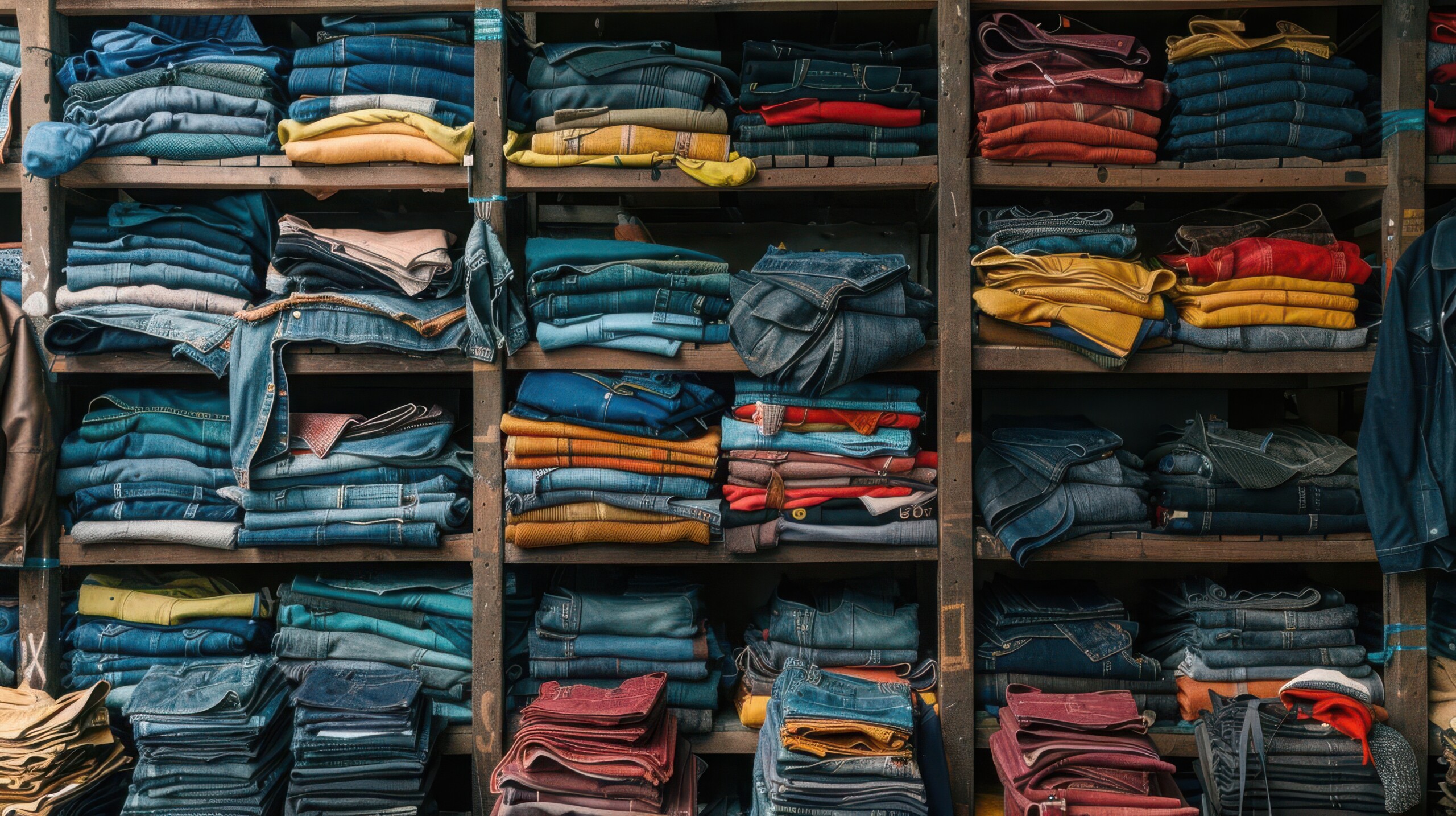
Textile circularity is a major focus across the fashion, workwear and wider textile industry, but what does it actually mean in practice? At its core, it’s about reducing fashion’s growing waste problem by keeping materials in use for longer.
Introduction
Textile circularity is a major focus across the fashion, workwear and wider textile industry, but what does it actually mean in practice? At its core, it’s about reducing fashion’s growing waste problem by keeping materials in use for longer. Post-consumer textiles, such as worn clothing, towels, bedding or curtains, are items that have already been used by consumers. In a circular system, these would be collected and the items or their materials, reused or recycled instead of being discarded.
But of the approximately 1.4 million tonnes of post-consumer textiles generated in the UK every year, nearly half ends up in general waste - destined for incineration or landfill. It's a stark reality that sits uncomfortably alongside growing environmental awareness amongst consumers.
People now expect fashion to be more responsible for how it’s outfitting the world. And already in some regions – namely the EU and the USA – regulations are being introduced to force textile producers to cut waste and start building circularity into the ways they operate. So, what is textiles EPR?
Textiles EPR: Regulatory change is coming in the EU and USA
A host of new guidelines and tEPR laws that companies have to comply with are coming into force relatively quickly, after years of consultation and planning. Across the EU and parts of the USA, fashion brands are being pushed to take responsibility for how products are made, what claims are made about them, and what happens after they’re sold, with increasing legal consequences for weak supply chain oversight, vague sustainability marketing, and poor reporting systems.
Taking note of these developments is vital for UK textile producers today, so that when tEPR laws are passed here, compliance will be far easier to manage.
EUROPE: A fast-moving regulatory wave with major supply chain implications
How will EU Textile EPR laws affect British retailers?
Europe is rolling out a tightly connected set of sustainability and accountability regulations that are rapidly reshaping how fashion retailers design products, manage supply chains, report ESG progress, and communicate sustainability claims. Many of these laws link together (and spawn sub-requirements), creating a complex compliance environment. But it’s clear that greater transparency, circularity, and legal responsibility across the full value chain will be part of business life for the EU apparel and textile sector from now on.
Key EU legislation impacting fashion retailers
- Ecodesign for Sustainable Products Regulation (ESPR)
A cornerstone regulation aimed at making products more durable, repairable, reusable and recyclable. It is part of Europe’s broader push toward a circular economy.
- New measures are being rolled out starting this summer
- Includes rules that will affect product design and lifecycle standards
- Ban on destroying unsold clothing and footwear for large companies begins July 19, 2026
- Digital Product Passport (DPP) (under ESPR)
A major ESPR tool requiring product-level digital information to follow goods through the supply chain.
- Will require detailed product data (materials, sourcing, sustainability attributes)
- Intended to improve traceability, recycling, and consumer transparency
- Corporate Sustainability Reporting Directive (CSRD)
Requires large EU and non-EU companies operating in Europe to publicly report ESG activity and progress.
- Took effect in 2024, but was criticised as overly bureaucratic
- A provisional Omnibus simplification agreement is awaiting endorsement
- Once adopted, CSRD would apply to 80% fewer companies
- Expected to apply only to firms with 1,000+ employees and €450M+ net turnover
- Reporting originally due sooner may be delayed until 2028
- Corporate Sustainability Due Diligence Directive (CSDDD)
Focuses on requiring companies to identify and address harmful human rights and environmental impacts in their supply chains.
- Applies to companies with 5,000+ employees and €1.5B+ net turnover
- Establishes formal legal expectations for supply chain oversight and corrective action
- Green Claims Directive (GCD)
Designed to tackle ‘greenwashing’ by forcing brands to prove sustainability claims with credible evidence.
- Requires stronger substantiation of environmental marketing claims
- Seen as increasingly important as other reporting rules (like CSRD) are simplified
- Expected to take effect around September (per industry expectation)
How will EU Textile EPR laws affect British retailers?
Although the UK is no longer part of the EU, the revised Waste Framework Directive still affects UK businesses that sell textiles in the EU. The updated directive makes textile Extended Producer Responsibility (EPR) mandatory across all EU member states. This means companies that place textile products on the EU market must comply with the new rules.
The legislation must be implemented into national law by mid-2027, and operational EPR schemes are expected to be in place by April 2028.
Importantly, the rules apply to all companies selling textiles in the EU market, not just EU-based businesses. This includes non-EU brands, UK companies, and online sellers that supply textile goods to EU customers.
This means UK retailers will need to meet new compliance obligations such as registering in each EU country where they sell, paying EPR fees based on the volume and environmental impact of their products, and reporting detailed data on textiles placed on the market.
UNITED STATES: Fragmented state-by-state laws, but tightening pressure
In the US, fashion regulation is developing in a less coordinated way than Europe, largely through state-led initiatives. Instead of one unified framework, brands face a growing patchwork of laws targeting textile waste, labour conditions, and climate disclosures. The result is still significant pressure on fashion retailers, particularly large companies operating in states like California and New York, to improve accountability and reduce environmental harm.
Key US legislation impacting fashion retailers
- California Responsible Textile Recovery Act (SB-707)
Focused on textile waste and improving systems for recovery, recycling, and disposal.
- Pushes brands toward responsibility for what happens to textiles after consumer use
- California Garment Worker Protection Act (SB62)
Targets labour exploitation and wage theft in garment manufacturing.
- Strengthens accountability for labour conditions in garment supply chains
- Reinforces protections for garment workers and limits abusive pay practices
- California Climate Corporate Data Accountability Act (SB253)
Requires certain companies to disclose greenhouse gas emissions and climate-related data.
- Introduces mandatory climate reporting expectations
- Likely to impact major retailers with large supply chain footprints
- The Fashion Act (proposed / not yet passed)
A developing legislative effort aimed at increasing sustainability and accountability in fashion.
- Not law yet, but signals growing momentum toward formal regulation
- Often confused with other similarly named legislation
- New York Fashion Workers Act (passed December 2024)
A separate law from the proposed Fashion Act.
- Focuses on protections and fair treatment for fashion workers
- Shows increasing regulation beyond environmental issues into labour rights and governance
Bottom line for UK fashion retailers
While formal legislation hasn't yet landed in the UK, progress is being made towards tEPR. Industry bodies, compliance specialists and government publications all point to the same conclusion: UK textiles EPR is coming, and clothing producers should prepare now, rather than sit and wait for final regulations.
For UK businesses, this creates an interesting dynamic. If you're selling into EU markets, you're already navigating these requirements. If you're not, you're watching a dress rehearsal for what's likely coming to the UK, with the advantage of learning from early implementation challenges and successes.
2036: A vision of UK textile circularity
Let’s fast forward a decade. What might a circular UK textile sector look like? Here’s what we envisage, based on today’s ideas about textile circularity.
A mature regulatory framework
By 2036, UK tEPR legislation is likely fully operational, having learned from EU implementation and built on Britain's existing waste management expertise. Let’s imagine the scheme has evolved beyond simple compliance into a sophisticated system that balances producer responsibility with practical market realities.
Fee structures are likely to feature eco-modulation, whereby producers pay differentiated rates based on their products' environmental credentials. Durable, recyclable garments made from mono-materials attract lower fees. Complex, short-lived items with mixed fibres face premium charges. In these scenarios the financial incentive will be clear: design for circularity or pay the price.
Infrastructure evolution
Ideally, the sector will have evolved into a hybrid model that honours existing expertise while embracing innovation. Established "rag trade" organisations and charities will work alongside new entrants, combining decades of market knowledge with cutting-edge processing capabilities.
Automated sorting facilities will be operating at scale across the UK, processing hundreds of thousands of tonnes annually. These could be partnerships between traditional recyclers and technology providers, blending institutional knowledge with modern efficiency.
Crucially, the infrastructure will support a host of sorting, upcycling and recycling capabilities. Chemical recycling facilities will have fully developed, capable of breaking down complex textile blends into base materials for remanufacturing. What was once considered "contaminated" waste, meaning garments with mixed fibres and composite construction, now feeds valuable secondary material streams.
Transformed business models
By 2036 the producer landscape will need to have shifted dramatically. Rental and resale will no longer be niche offerings. Instead, they'll be mainstream business models. Major retailers will operate comprehensive take-back schemes, not as corporate social responsibility initiatives, but as profitable revenue streams.
Repair services will have been professionalised. What was once the domain of local alterations shops may be evolving into brand-managed repair programmes, extending product life and deepening customer relationships. Producers will have realised that keeping products in use longer doesn't cannibalise new sales. Instead take-back and resale models build customer loyalty and create touchpoints for brand story-telling and future purchases.
Design decisions will have to reflect this new reality. Products will be increasingly constructed for disassembly, with mono-material designs and modular components that facilitate end-of-life recovery. This will be about smart economics, not altruism. Lower tEPR fees and access to secondary materials will make circular design financially compelling.
Data-driven decisions
Digital tracking will need to become ubiquitous. Products will be required to provide detailed lifecycle information accessible at every stage, from manufacturing through multiple use cycles to final material recovery.
It might be that RFID tags, NFC triggers or QR codes will be widely used on garment labels or embedded in textiles, so that consumers and regulators can scan to access digitally stored information.
This data revolution has the potential to enable unprecedented optimization in fashion supply chains – imagine:
- When recyclers receive precise feedstock intelligence, they will be able to identify materials, and plan processing runs to maximise material recovery rates;
- Brands will be able to analyse return streams to identify design improvements; and
- Policymakers will be able to monitor compliance and measure progress against waste reduction targets with granular accuracy.
Collection systems reimagined
By 2036 we might envisage separate textile collections as standard across UK local authorities, mirroring the familiar systems we currently have for paper, glass and plastic. Householders will routinely separate textiles from general waste, understanding that these materials have value and destinations beyond incineration.
Collection points will have proliferated, not just charity shops but retailer take-back schemes, automated collection kiosks and dedicated textile banks. The infrastructure will make participation convenient, driving capture rates above 80%.
Incineration of textiles will have plummeted. What was once the destination for half of all textile waste will handle only genuinely unrecoverable materials - heavily contaminated items or those that have exhausted all reuse and recycling options.
What this means for your business today
If you're feeling overwhelmed by this future vision of tEPR compliance obligations, here's some reassurance: you don't need to solve everything immediately. But early preparation delivers tangible advantages.
Think of tEPR readiness as capability building. The systems you develop to meet regulatory requirements - detailed product data, reverse logistics, digital tracking, circular design principles - enable entirely new business models. Rental, resale, repair and remanufacturing all depend on the same foundational capabilities that tEPR demands.
Practical steps you can take now
- Start talking to suppliers and gathering product composition data. You'll need this for future reporting, but it also informs better design decisions and helps you identify opportunities for material consolidation.
- Consider design decisions that support end-of-life recovery. Can you reduce material mixing? Simplify construction for easier disassembly? Use mono-materials where possible? These choices reduce future compliance costs whilst potentially opening new market opportunities.
- Monitor EU tEPR schemes for insights into UK direction. The challenges, solutions and best practices emerging from European implementation provide a roadmap for UK businesses.
- Engage with industry discussions to influence scheme development. UK policymakers are watching the EU closely and consulting with industry. Your voice can help shape regulations that balance environmental objectives with commercial practicality.
The key is building knowledge and capabilities gradually, not attempting overnight transformation – and allowing flexibility as you see where, when and how the legislation actually lands. Small, consistent steps compound into significant readiness.
Textile circularity as evolution, not revolution
Hopefully we have answered the question: What is textiles EPR? We’ve also explored what a future where tEPR is part of everyday life.
At ERP UK we believe the future of UK textile circularity is a managed evolution that builds on existing foundations while embracing necessary innovation.
The UK has valuable time to learn from EU implementation, understanding what works and what doesn't before introducing domestic legislation. We can build on the expertise of organisations that have managed textile waste for decades, respecting their knowledge while welcoming new entrants and technologies that enable scale.
The textile sector in 2036 will look different from today. But the path from here to there is navigable, especially with expert guidance and early action.
Need support navigating textile EPR compliance?
You can read more about tEPR and how ERP UK can help here.
ERP UK brings expertise from operational schemes across Europe, helping businesses prepare for regulatory requirements whilst identifying strategic opportunities. Get in touch to discuss how we can support your journey toward textile circularity.
Related services
EPR for Textiles - visit our webpage here
Extended Producer Responsibility - visit the webpage here
About ERP UK
To learn more about ERP UK and our services please visit our About page
Contact us today:
Telephone: +44 (0)20 3142 6452
E-mail: uk@erp-recycling.org
Follow ERP UK on LinkedIn here:


Share on