
 Member login
Essential Guide for UK HVAC Sector
Summer is on its way. Temperatures are climbing, order books are filling and the UK’s HVAC sector is gearing up for a key season. With the World Cup 2026 tournament kicking off in July, pubs, bars, hotels and homes across the country will be cranking up the air conditioning to stay cool while the matches play out. For HVAC businesses, that’s great news for demand.
How to make WEEE compliance a breeze this summer
Summer is on its way. Temperatures are climbing, order books are filling and the UK’s HVAC sector is gearing up for a key season. With the World Cup 2026 tournament kicking off in July, pubs, bars, hotels and homes across the country will be cranking up the air conditioning to stay cool while the matches play out. For HVAC businesses, that's great news for demand.
With growth comes responsibility. If your company manufactures, imports or supplies air conditioning units, heat pumps or other cooling equipment, you almost certainly have legal obligations under the UK's Waste Electrical and Electronic Equipment (WEEE) regulations. And summer is exactly the right time to make sure you're on top of them.
This guide is here to help. Whether you're a compliance professional or a smaller business owner getting to grips with the rules for the first time, here's what you need to know.
First things first: EEE and WEEE explained
It's worth being clear on the terminology.
EEE stands for Electrical and Electronic Equipment. This is the equipment your business places on the UK market; the air conditioning units, heat pumps, dehumidifiers and air purifiers you manufacture, import or sell.
WEEE stands for Waste Electrical and Electronic Equipment. This is what that equipment becomes at the end of its useful life; when it's discarded, replaced or collected for recycling.
The WEEE regulations exist to ensure that the businesses responsible for placing EEE on the market also take responsibility for what happens to it when it becomes waste. That's the core principle of Extended Producer Responsibility (EPR).
Who does this apply to?
Under WEEE regulations, you are considered a producer if you:
- Manufacture and sell EEE under your own brand name
- Resell equipment under your own brand (even if someone else made it)
- Import EEE commercially into the UK
- Supply EEE to the UK market via distance selling from outside the UK
If any of these apply to your business, you have compliance obligations. Retailers and distributors also have responsibilities - specifically, a legal obligation to provide customers with a free, one-for-one takeback service when selling new equipment.
Which HVAC sector products are in scope?
Most cooling and climate control equipment falls within the scope of WEEE regulations. Key products include:
- Portable and split-system air conditioning units
- Window AC units
- Air-source and geothermal heat pumps
- Heat pump tumble dryers
- Refrigerant-containing boilers
- Dehumidifiers
- Air purifiers
- Wine coolers and refrigerated display cabinets
- Commercial refrigeration units
A useful rule of thumb: anything with a plug or a battery is in scope.
More technically -if your equipment relies on electric currents or electromagnetic fields to work, and operates at ≤1,000V AC or ≤1,500V DC.
Within this scope, EEE is classified into different types of products. Temperature exchange equipment uses refrigerants, gases, or fluids (other than water) to cool, heat, or dehumidify, and fall under the UK’s WEEE Category 12. This covers heat pumps, air conditioning units, commercial refrigeration systems and refrigerated display cabinets. This classification carries specific reporting requirements and means the equipment must be handled by specialist treatment facilities capable of safely recovering refrigerant gases. This isn't just a regulatory formality. Refrigerants can be hazardous if released, so proper disposal genuinely matters.
Don’t forget the refrigerant factor
Heating and cooling businesses face particular challenges because of what's inside their products. Unlike packaging waste or simple electronics, equipment containing refrigerants needs specialist handling during recycling, with hazardous substances safely removed by authorised facilities.
Refrigerants like HFCs and HCFCs are potent greenhouse gases. If released during improper disposal, they can have global warming potential thousands of times greater than CO2. That's why only Approved Authorised Treatment Facilities (AATFs) can handle this equipment. Here, they have the specialist equipment and trained personnel to safely extract, contain and dispose of these substances.
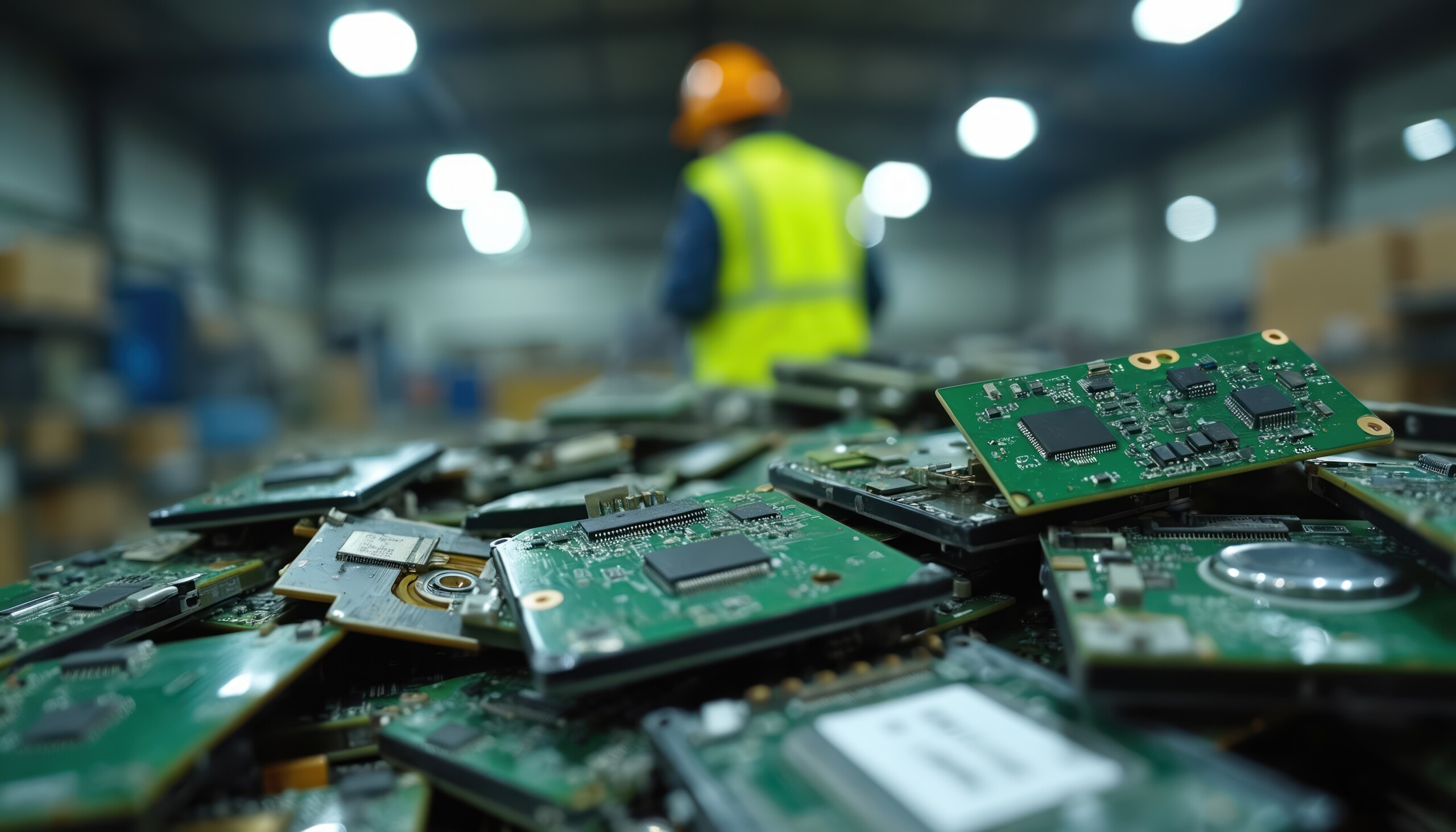
The recycling process for your equipment is complex. First, refrigerants must be carefully extracted and either destroyed or reclaimed for reuse. Then the equipment is dismantled, with different material streams separated. Metals like copper and aluminium go to metal recyclers, plastics are sorted by type, and circuit boards are processed to recover precious metals. Compressors require special handling due to the oils they contain.
Remember these 2 key points:
- Refrigerant extraction: Only Approved Authorised Treatment Facilities (AATFs) can safely recycle HVAC equipment
- Material streams: Different components in your equipment need separating for different recycling processes
This complexity is reflected in recycling costs which are typically more than for simpler electrical items because of the specialist processing required. It's one reason why accurate tonnage reporting matters; you need to budget appropriately for these costs.
WEEE compliance: What are your obligations?
If you're a producer, your core compliance requirements are:
- You must register as a producer. If you place less than 5 tonnes of EEE on the UK market annually, you can register directly with the Environment Agency or join a Producer Compliance Scheme (PCS). If you place more than 5 tonnes annually, joining a PCS is mandatory.
- Annual reporting. You must report the total weight of equipment you've placed on the UK market each year, broken down by product category.
- Record keeping. Detailed records of weights, materials and quantities must be maintained. The Environment Agency can audit your business at any time, so accurate documentation is essential.
- You must facilitate the collection and proper treatment of end-of-life equipment, including safe refrigerant recovery. Retailers and distributors must offer free one-for-one takeback to customers purchasing new equipment. ERP UK provides this service and you can find out more here[2].
- Budgeting for costs. Compliance comes with costs, which means registration fees, recycling charges and data management. These need to be factored into your business planning.
What changed in WEEE compliance last summer?
It's worth knowing about government amendments to WEEE regulations that came into force on 12 August 2025. These mainly affect online marketplaces (OMPs) selling electrical goods from non-UK suppliers, so they might not touch your business directly. But if you sell through online platforms, pay attention.
These marketplaces now count as "producers" when they facilitate sales of electrical equipment from overseas suppliers to UK customers. They must track and report these products, join compliance schemes and submit quarterly returns. For UK-based cooling businesses, this creates fairer competition by ensuring overseas sellers using these platforms also cover end-of-life costs. If online marketplaces feature in your sales strategy, these changes underline why everyone in your supply chain needs to understand their WEEE responsibilities.
What happens if you don't comply with WEEE regulations?
The Environment Agency takes WEEE obligations seriously, and the consequences of falling short can be significant:
- Substantial fines
- Sales restrictions
- Formal compliance notices
- Criminal prosecution
- Personal liability for company directors
- Damage to supplier relationships and business reputation
With the HVAC market growing rapidly, particularly in heat pumps and energy-efficient cooling, regulatory scrutiny is increasing alongside it. Businesses that treat compliance as an afterthought are taking a real risk.
Six steps to get compliant this summer
If you're not yet fully on top of your WEEE obligations, here's a practical starting point:
- Audit your product portfolio. Identify which products you place on the UK market and which WEEE categories they fall into.
- Calculate your annual tonnage. Work out the total weight of EEE you place on the market each year. This determines your registration route.
- Register appropriately. Join a Producer Compliance Scheme or register directly with the Environment Agency, depending on your tonnage.
- Implement data tracking systems. Put processes in place to record weights, quantities and materials accurately from the outset.
- Budget for compliance costs. Factor registration fees and recycling charges into your annual planning.
- Submit data returns on time. Missing deadlines creates unnecessary risk. Build reporting dates into your business calendar.
How ERP UK takes the heat out of compliance
Getting compliant doesn't have to be complicated. That's where ERP UK comes in.
As one of the UK's leading Producer Compliance Schemes, ERP UK works with over 700 businesses to simplify WEEE obligations and make the whole process straightforward by taking on their collective obligations for recycling of household WEEE across all 15 categories.
For HVAC businesses, that means expert guidance on which products are in scope, support with data collection and reporting, and a compliance framework that handles the regulatory complexity so you don't have to.
ERP UK's takeback services are designed specifically to meet the practical needs of the cooling and heating sector. From cooling equipment collections, including fridge freezers, air conditioning units and heat pumps, through to secure handling of refrigerant-containing appliances, the team provides collection solutions that are built around your business, not the other way around.
Being part of the ERP UK scheme means you can focus on what you do best: keeping the UK cool this summer. Whether that's fitting air conditioning in a hotel ahead of the World Cup, supplying heat pumps to a growing residential development or managing a commercial refrigeration contract, your compliance is taken care of.
Make this summer a stress-free one
The HVAC sector has a busy few months ahead. Demand is high, the regulatory environment is evolving and the stakes for getting compliance wrong are real.
The good news is that with the right support in place, WEEE compliance can simply be part of how your business operates - professionally, responsibly and without the last-minute sweat.
Related services
WEEE Compliance: Our WEEE compliance scheme simplifies environmental compliance for companies making or importing electrical and electronic equipment. Our solution takes care of all your legal obligations from registration and reporting to collection and recycling.
To find out how ERP UK's takeback services can support your business this summer visit our Takeback webpage
Visit our WEEE Compliance webpage for further details
About ERP UK
To learn more about ERP UK and our services please visit our About page
Contact us today:
Telephone: +44 (0)20 3142 6452
E-mail: uk@erp-recycling.org
Follow ERP UK on LinkedIn here:


Share on


